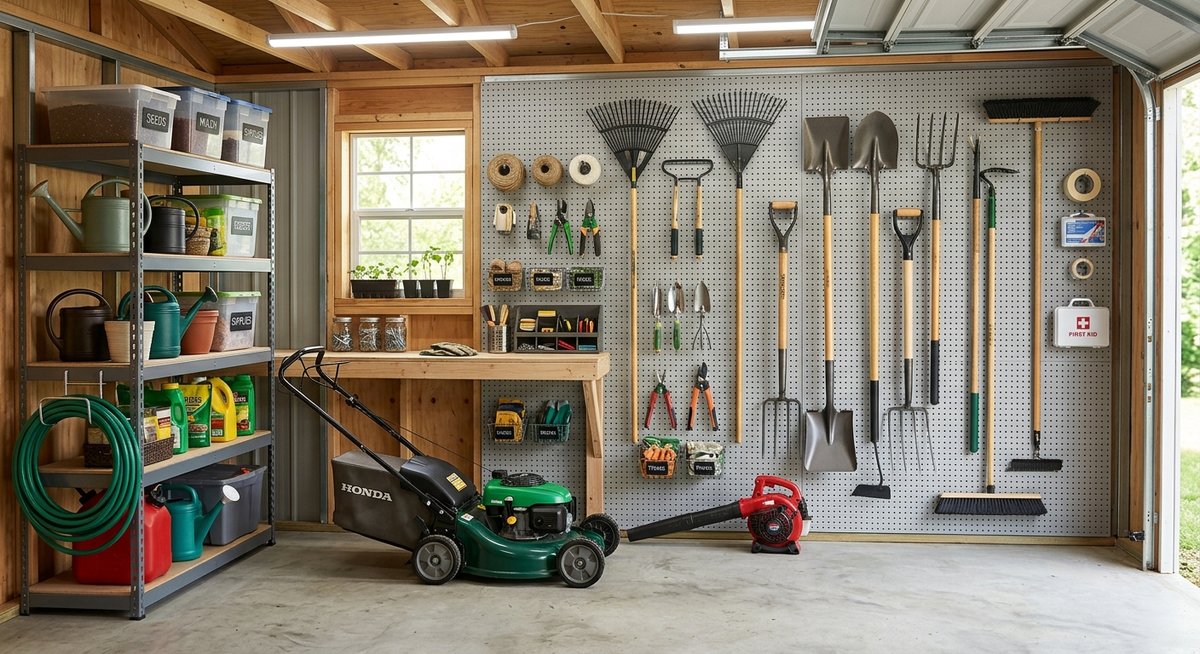
The Challenge of Tool Storage
Yard equipment and gardening tools come in all shapes and sizes — from small hand trowels to bulky lawn mowers. Without a proper organization system, your tool shed can quickly become a jumbled mess where nothing is easy to find. This guide provides practical storage ideas specifically designed for tool sheds, helping you keep every piece of equipment in its place.
Assess Your Tool Inventory
Before organizing, take stock of what you need to store:
Long-Handled Tools
- Shovels, rakes, hoes, and pickaxes
- Leaf rakes and garden forks
- Trimmers and edgers with long handles
- Brooms and push brushes
Hand Tools
- Trowels, pruners, shears, and loppers
- Hammers, screwdrivers, and wrenches
- Garden knives and scissors
- Weeders and cultivators
Power Equipment
- Lawn mower (push or riding)
- String trimmer and hedge trimmer
- Chainsaw and leaf blower
- Pressure washer
Accessories and Supplies
- Extension cords and hoses
- Fertilizer, soil, and mulch bags
- Pots, trays, and planters
- Sprays, oils, and fuel
Pegboard Wall Systems
Pegboards are the most versatile tool storage solution for any shed:
- Install pegboard panels on at least one wall
- Use a variety of hooks: single, double, and tool-specific
- Outline each tool on the pegboard with a marker so you know where it goes
- Group similar tools together (cutting tools on one section, digging tools on another)
- Keep frequently used tools at eye level and arm reach
Long-Handled Tool Storage
Long tools need dedicated storage to prevent them from falling and creating hazards:
Wall-Mounted Racks
- Install tool racks with spring-loaded grips for rakes and shovels
- Use heavy-duty hooks spaced to accommodate handle widths
- Mount a PVC pipe rack: cut sections of PVC pipe and screw them to the wall as tool holders
Corner Storage
- Use corner brackets to create a dedicated long-tool corner
- Install a tension rod from floor to ceiling for leaning tools
Shelving for Supplies
Shelves keep boxes, bins, and supplies organized and off the floor:
- Install adjustable metal shelving units for flexibility
- Use the top shelf for seasonal items accessed infrequently
- Keep heavy bags (soil, fertilizer) on the bottom shelf or floor
- Label shelves by category for quick identification
Power Equipment Storage
Large equipment needs dedicated floor space and smart positioning:
- Park the lawn mower nearest the door for easy access
- Hang trimmers and blowers on wall-mounted brackets
- Store extension cords on a cord reel mounted to the wall
- Keep fuel and oil in a locked cabinet away from heat sources
Small Parts and Hardware
Small items are easily lost in a tool shed. Keep them organized with:
- Glass jars with screw-on lids: Mount the lid under a shelf and screw the jar up
- Magnetic strips: Mount on the wall for screws, nails, and small metal parts
- Tackle boxes: Use for small tools and hardware with many compartments
- Label maker: Label every container and shelf for quick identification
Maintain Your Organization System
An organization system only works if you maintain it:
- Return tools to their designated spots after every use
- Clean tools before storing to prevent rust and contamination
- Sweep the shed floor monthly
- Re-evaluate your system each season and adjust as needed
- Remove tools that are no longer used or are broken beyond repair
Conclusion
A well-organized tool shed saves time, protects your equipment, and makes yard work more enjoyable. By installing pegboard systems, creating dedicated storage for long-handled tools, using shelving for supplies, positioning power equipment strategically, and organizing small parts, you can transform your tool shed into an efficient workspace. The key is having a designated spot for every item and maintaining the system consistently.
Need a tool shed? Browse our Tool Sheds collection.