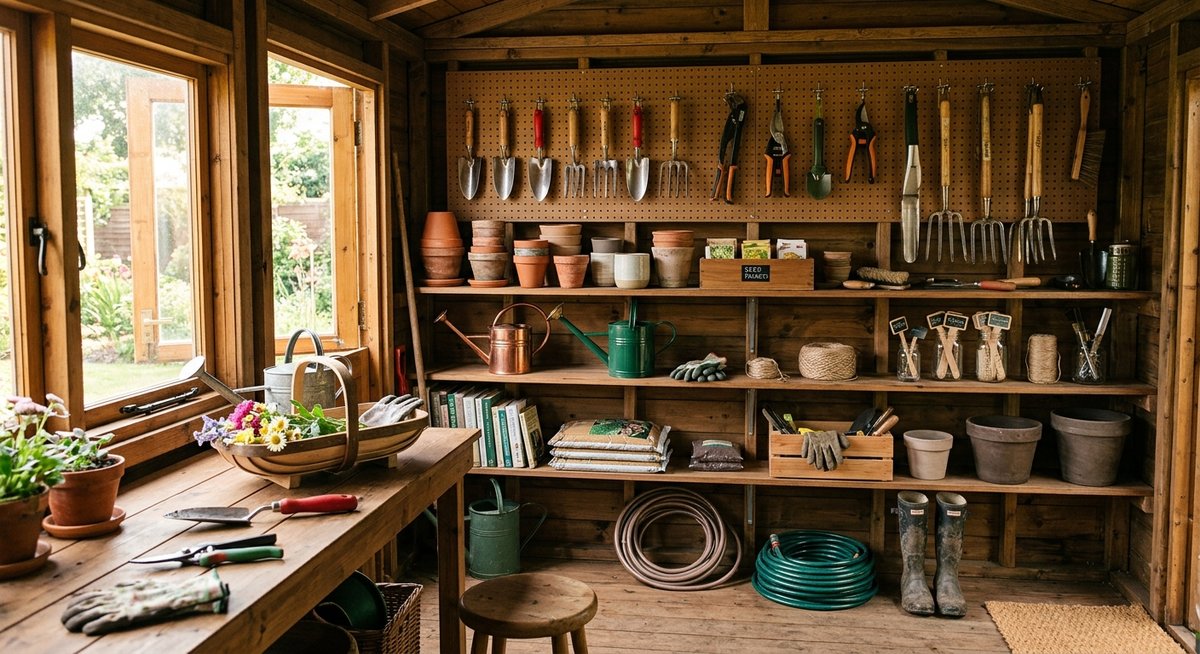
Why Shed Organization Matters
A disorganized garden shed wastes space, makes tools hard to find, and creates frustration every time you need something. With a thoughtful organization system, you can fit more into your shed, find items quickly, and keep your equipment in better condition. This guide provides practical strategies for maximizing storage in any garden shed.
Start With a Clean Slate
Before organizing, empty your shed completely. This gives you a clear picture of what you have and what you actually need.
Sort and Declutter
- Group similar items together
- Discard broken or expired items (old fertilizer, cracked pots, rusted tools)
- Donate or sell duplicate tools
- Measure your remaining items to plan storage space
Create Storage Zones
Divide your shed into functional zones based on how you use items:
- Tool zone: Hand tools, pruners, trowels, and small equipment
- Equipment zone: Lawn mower, trimmer, spreader, and large tools
- Garden supplies zone: Soil, fertilizer, pots, seeds, and plant food
- Seasonal zone: Holiday decorations, patio cushions, and seasonal gear
- Chemical zone: Pesticides, herbicides, and fuels (stored safely and labeled)
Zones keep related items together and make everything easier to find.
Maximize Vertical Space
Most sheds have far more vertical space than floor space. Use it to your advantage:
Wall-Mounted Storage
- Install pegboards for hand tools — each tool has a visible, accessible spot
- Mount brackets for long-handled tools (rakes, shovels, hoes)
- Use magnetic strips for metal tools
- Hang baskets or bins for lightweight items
Shelving Systems
- Install floor-to-ceiling shelves along one or two walls
- Use adjustable shelving so you can reconfigure as needs change
- Place frequently used items at eye level and seasonal items up high
- Leave the bottom shelf for heavy items like soil bags and fertilizer
Use the Right Storage Containers
Containers keep small items organized and protected:
- Clear bins: See contents at a glance. Great for seeds, gloves, and small tools.
- Labeled jars: Perfect for screws, nails, and small hardware.
- Hooks and carabiners: Hang items from ceiling rails or wall mounted rods.
- Drawer units: Stackable plastic drawers for frequently accessed small items.
Optimize Floor Space
Keep the floor as clear as possible for large equipment:
- Park the lawn mower in the most accessible spot
- Use a fold-down table for potting that can be stowed when not in use
- Store bulky items (bags of soil, mulch) on pallets to keep them off the floor
- Leave a clear pathway to the back of the shed
Lighting and Accessibility
A well-lit shed is easier to use and organize:
- Install a battery-powered LED light if your shed has no electricity
- Add a solar-powered light near the door
- Keep the entrance clear for easy access
- Use reflective tape on shelf edges to improve visibility
Maintenance Tips
Once organized, keep your shed that way:
- Return tools to their designated spots after each use
- Sweep the floor monthly
- Check for moisture or pest issues quarterly
- Re-evaluate your organization system each season
Conclusion
Organizing your garden shed transforms it from a cluttered storage space into an efficient, accessible workshop. By creating zones, maximizing vertical space, using the right containers, and maintaining your system, you can fit more into your shed and find everything you need in seconds. Start with a clean slate, plan your zones, and build your storage system one wall at a time.
Need a shed to organize? Browse our Garden Sheds collection.