Why Preparation Matters
Buying an outdoor storage shed is an investment that should serve your backyard for years. Rushing into a purchase without proper research can lead to choosing the wrong size, violating local codes, or ending up with a shed that does not meet your needs. These seven considerations will help you make a smart, informed purchase.
1. Local Building Codes and Permits
This is the most important step before buying any shed. Building codes vary by city, county, and state. Failing to comply can result in fines or forced removal.
What to Check
- Maximum shed size allowed without a permit (typically 120-200 square feet)
- Setback requirements (distance from property lines, fences, and structures)
- Maximum height restrictions
- Foundation requirements
- Homeowners association (HOA) rules on materials, colors, and placement
Contact your local building department before purchasing. It takes one phone call and can save you significant headaches.
2. Available Space and Placement
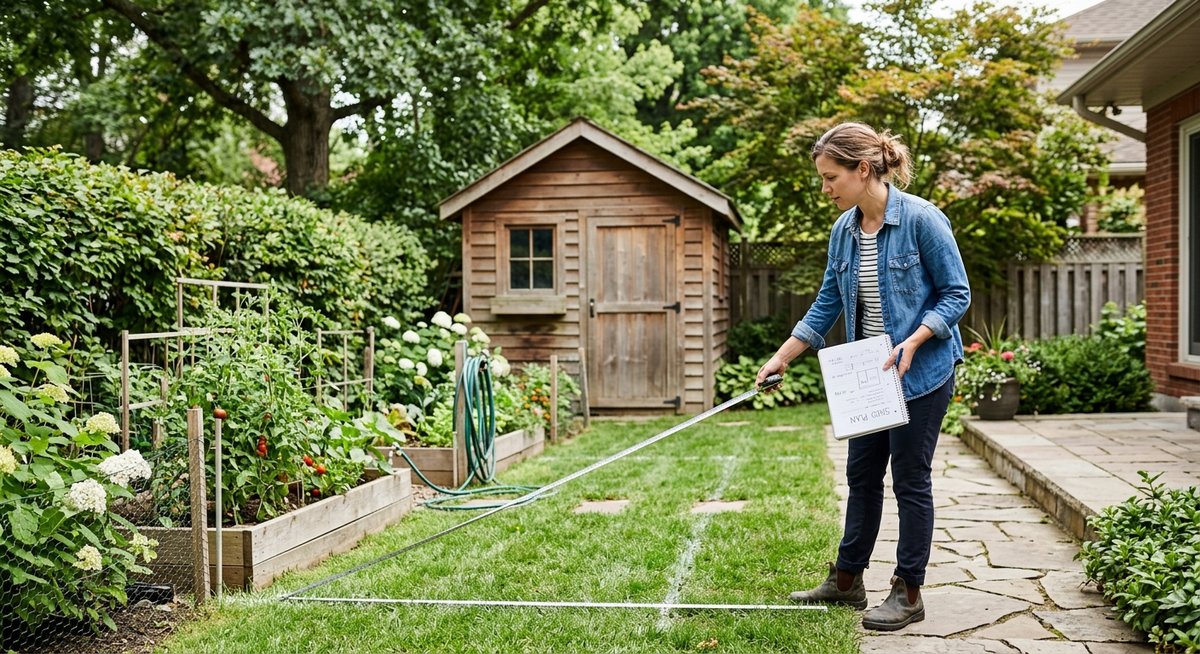
Measure your available space carefully and consider how the shed will fit into your backyard:
- Footprint: Measure the exact area where the shed will sit, including extra space for door clearance and roof overhang
- Access: Ensure you can easily reach the shed door with equipment
- Level ground: The site should be relatively flat or be prepared for leveling
- Drainage: Avoid low spots where water collects after rain
- Sun exposure: Consider how sunlight affects the shed interior (metal sheds can get hot)
3. What You Plan to Store
Your storage needs determine the shed size, door type, and interior features:
- Hand tools and small items: A 5x3 or 6x4 foot shed is sufficient
- Lawn mower and medium equipment: An 8x6 or 10x10 foot shed with double doors
- Workshop setup: A 10x12 or larger shed with windows for natural light
- Multiple large items: A 12x16 foot shed with wide double doors
List everything you plan to store and measure the largest items before choosing a size.
4. Material Selection
Each shed material has different maintenance, durability, and aesthetic characteristics:
- Wood: Beautiful, customizable, requires periodic staining. Best for aesthetics.
- Metal: Durable, low-maintenance, fire-resistant. Best for security and longevity.
- Resin: Maintenance-free, easy assembly, rot-proof. Best for convenience.
Choose a material that matches your climate, maintenance tolerance, and backyard style.
5. Foundation Requirements
A proper foundation prevents structural problems and extends the life of your shed:
- Concrete slab: Most durable, required for large sheds, most expensive
- Gravel base: Good drainage, affordable, suitable for most sheds
- Wooden skid: Budget option, less durable, may need replacement over time
- Paver base: Attractive, moderate cost, good for small to medium sheds
Budget for the foundation as part of your total shed cost. A good foundation can add $200-$1,000 depending on size and type.
6. Security Features
If you store valuable equipment, security should be a priority:
- Look for sheds with built-in locking mechanisms
- Check for padlock loops or hasps
- Consider reinforced doors for metal sheds
- Position the shed where it is visible from your house
- Add motion-sensor lighting near the shed entrance
7. Long-Term Value
Consider the total cost of ownership, not just the purchase price:
- Wood sheds may cost less upfront but require ongoing maintenance costs
- Metal sheds offer excellent value over time with minimal maintenance
- Resin sheds provide the lowest total cost of ownership
- Factor in foundation costs, assembly time, and potential permit fees
- A quality shed can last 10-25 years, making it a long-term investment
Conclusion
Taking time to evaluate these seven factors before buying an outdoor storage shed ensures you make a purchase you will be satisfied with for years. Check your local codes, measure your space, list your storage needs, choose the right material, plan your foundation, consider security, and think about long-term value. A well-chosen shed adds functionality and organization to your backyard while protecting your valuable equipment.
Ready to shop? Explore our full collection of outdoor storage sheds.