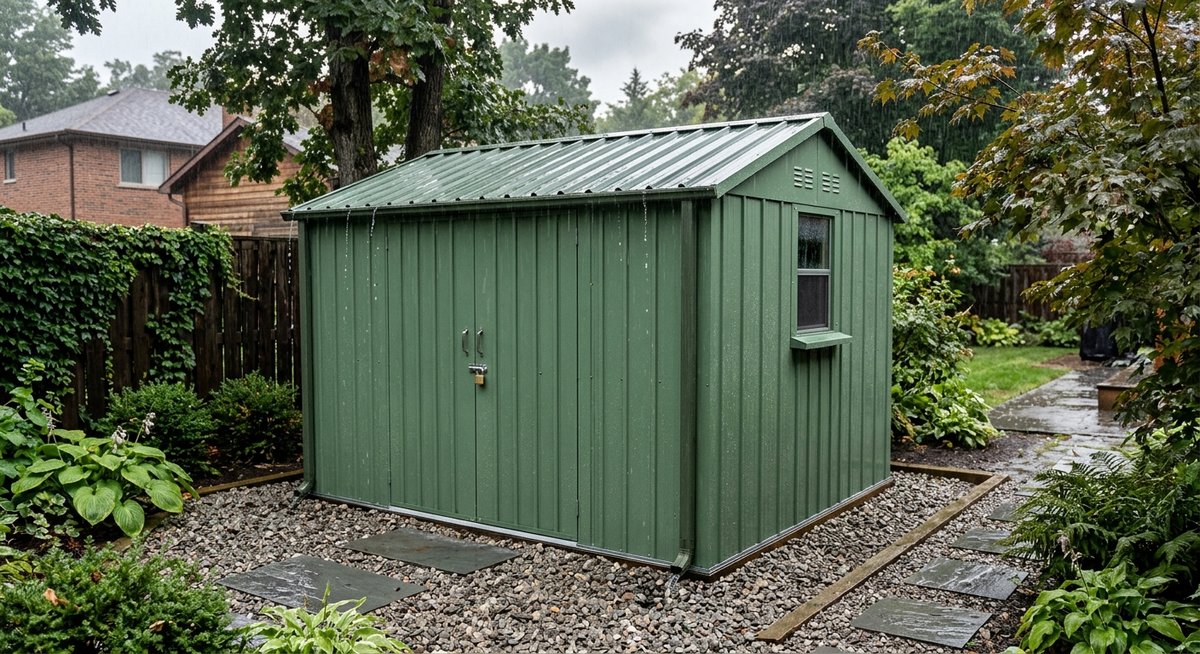
Why Weather Protection Matters
Your outdoor storage shed faces rain, snow, wind, UV rays, and temperature fluctuations year-round. Without proper protection, moisture can seep in, wood can rot, metal can rust, and stored items can be damaged. Protecting your shed from weather extends its lifespan and keeps your belongings safe. This guide covers the most effective strategies for weatherproofing any type of outdoor shed.
Start With Proper Placement
Weather protection begins before you even install your shed. Where you place it matters as much as how you build it.
Choose an Elevated Spot
- Avoid low-lying areas where water pools after rain
- Select a spot with natural drainage away from the shed
- If the only available spot is low, build up the ground with gravel before installation
Consider Wind Exposure
- Position the shed door away from prevailing winds
- Place the shed near a fence or wall for wind protection (but maintain required setbacks)
- Anchor the shed securely to its foundation
Install a Proper Foundation
The foundation is your first line of defense against ground moisture:
- Concrete slab: Best moisture barrier, keeps shed floor completely dry
- Gravel base: Provides excellent drainage, prevents water from pooling under the shed
- Treated wood skid: Elevates the shed off the ground, but check periodically for rot
- Paver base: Good drainage with a level surface
Whatever foundation you choose, ensure the shed floor is at least 2-3 inches above surrounding ground level.
Waterproof the Roof
The roof is the most exposed part of your shed. Ensure it sheds water effectively:
- Check that the roof slope allows water to run off freely
- Inspect roof panels or shingles annually for gaps or damage
- Apply roofing sealant to any visible cracks or seams
- Keep the roof clear of leaves and debris that can trap moisture
- For flat-roof sheds, ensure drainage holes are not blocked
Seal Walls and Joints
Water can enter through the smallest gaps. Seal your shed thoroughly:
For Wood Sheds
- Apply weather-resistant stain or paint every 2-3 years
- Seal all joints and corners with exterior caulk
- Check for gaps around windows and doors annually
- Use weather stripping on doors to prevent water and air infiltration
For Metal Sheds
- Inspect for scratches in the coating and touch up with matching paint
- Seal all panel joints with silicone caulk
- Check that rubber gaskets around screws are intact
- Apply rust inhibitor to any exposed metal
For Resin Sheds
- Check that all panel connections are tight and properly snapped
- Inspect rubber seals around doors and windows
- Resin is naturally waterproof but joints can separate over time
Ensure Proper Ventilation
Ventilation prevents condensation buildup, which can cause mold, mildew, and rust inside your shed:
- Install vents near the roof line to allow hot, moist air to escape
- Add low-level vents near the floor for air intake
- Keep vents clear of obstructions
- Leave the shed door open on dry, warm days to air out the interior
- Consider a solar-powered vent fan for sheds in humid climates
Protect Against Ground Moisture
Even with a good foundation, ground moisture can affect your shed:
- Install a vapor barrier under the shed floor
- Keep the area around the shed clear of vegetation that traps moisture
- Ensure soil slopes away from the shed base
- Use a dehumidifier inside the shed if you live in a very humid climate
Seasonal Maintenance Checklist
- Spring: Inspect for winter damage, clean roof, check seals
- Summer: Re-stain wood sheds, touch up metal paint, clear vegetation
- Fall: Clean gutters if present, check ventilation, seal gaps before winter
- Winter: Remove snow from roof, check for ice damage, ensure door opens freely
Conclusion
Protecting your outdoor shed from weather and moisture is an ongoing process that pays off in extended shed life and protected belongings. By choosing the right placement, installing a proper foundation, sealing walls and roofs, ensuring ventilation, and performing seasonal maintenance, you can keep your shed in excellent condition for years. A well-protected shed is a reliable storage solution that withstands whatever nature throws at it.
Looking for a weather-resistant shed? Browse our Metal Sheds and Wooden Sheds collections.